

Change management: on wanting, needing and being able to change [3]
In this blog, Lonneke Goei looks at the role of ‘willingness to change’ when implementing Purchase to Pay projects and what makes a good change approach.

Change is inevitable. Every organisation has to deal with it, and the digital transformation of Purchase to Pay (P2P) processes is no different. What should you look out for when you introduce changes to processes and systems? How do you bring your people with you?
In a series of blogs, Lonneke Goei, Senior Consultant & Change Management expert at Spendlinq, explains how a pragmatic approach to change management can contribute to a successful digital transformation of your P2P processes. In blog 3 of this series, Lonneke looks at the role of ‘willingness to change’ when implementing P2P projects and what makes a good change approach.
On wanting, needing and being able to change
In the digital transformation of Purchase to Pay (P2P) processes, the focus is usually on the right use of processes, technology and data, and people are often overlooked. Yet they are an indispensable factor in making digital transformation succeed. You can want to implement the most innovative system there is, but if your people don’t back it, it will absolutely not be a success! Reaching a new, desired situation with new (or changed) processes and technology requires changes in behaviour. The intention employees need to have for these behavioural changes can be summed up as ‘readiness for change’. The higher the readiness for change among the people in the organisation, the sooner you’ll see the desired behavioural changes, and so the sooner you’ll reach the desired project result.
What is readiness for change?
“Readiness for change is an employee’s positive behavioural intention towards the introduction of changes in the structure, culture or way of working of an organisation or department, resulting in an effort on the employee’s part to support or accelerate the change process.”
Since 1997, Erwin Metselaar has carried out thorough research into readiness for change at a range of companies and organisations. In his DINAMO model, readiness for change is influenced by three motivators: wanting, needing and being able to change, under which he has identified 14 different factors. Think of employee involvement, employees’ knowledge and experience, including with change, and the presence of an external necessity for the change. There are also more project-related factors, such as the timing and complexity of the change.
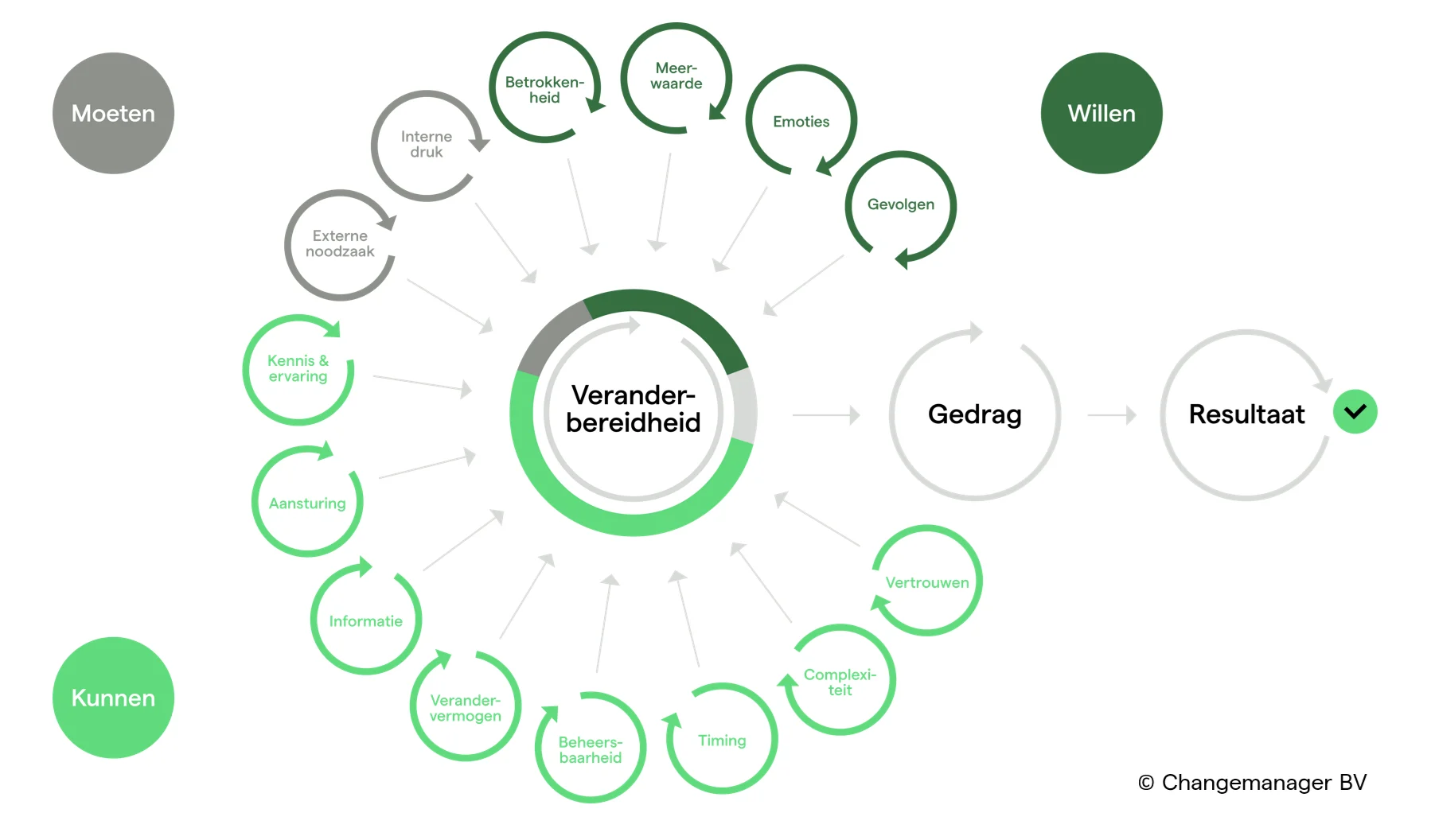
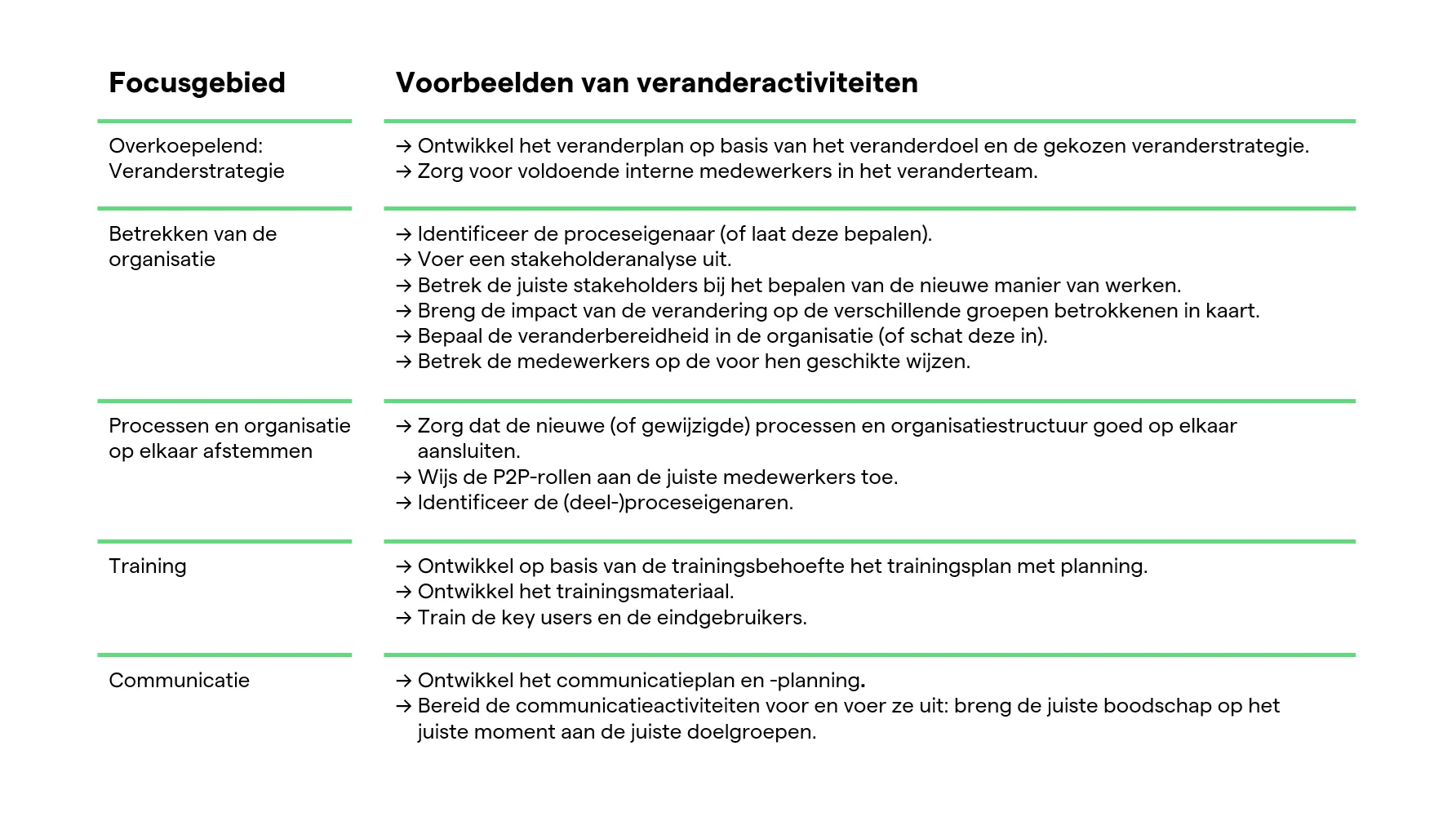
A good change approach distinguishes four focus areas, which follow the phases of the project and whose activities align with the three motivators of the DINAMO model: wanting, needing and being able to change. The four focus areas are:
- Involving the organisation: gaining commitment and support for the change from employees and management across the organisation
- Aligning processes and organisation: making sure the new processes and the organisational structure are in line with each other. Clarity on process ownership is also important here.
- Training: educating the people who play a role in the new processes. In P2P these are usually the various requesters, approvers (such as budget holders and product experts) and the accounts payable administration. Sometimes suppliers too, who may have to work with a new supplier portal.
- Communication: informing everyone (internal and external) affected by the changes to the P2P process in good time.
What should you think about when planning change activities? Below are a few examples for each focus area. It’s worth noting that the focus areas and their change activities don’t stand alone – they’re often closely connected. And keep the approach pragmatic. Choose the activities that add value for your P2P programme.
Change management: indispensable in every P2P project!
“Without attention to change management in a change programme, a project can still succeed, but probably at higher cost, with later go-live dates and with less motivated employees. Using change management well increases employees’ readiness for change, and with it the likelihood of a successful change. Good experiences also help an organisation build the right change competencies and reap the benefits in future change programmes,” Lonneke concludes.
Read the whitepaper | Why change management is crucial in the digital transformation of P2P processes
You may recognise the challenges we’ve outlined and want to know how you can apply change management in your own organisation. In this whitepaper you can read what change management involves in practice and what role it can play in implementing P2P projects. And how a pragmatic approach to change management contributes to a successful digital transformation of your P2P processes.
Download the whitepaper here.